Kosmos Pendant Light: Geometry, Light Direction, and Architectural Character
Updated: Aug 15
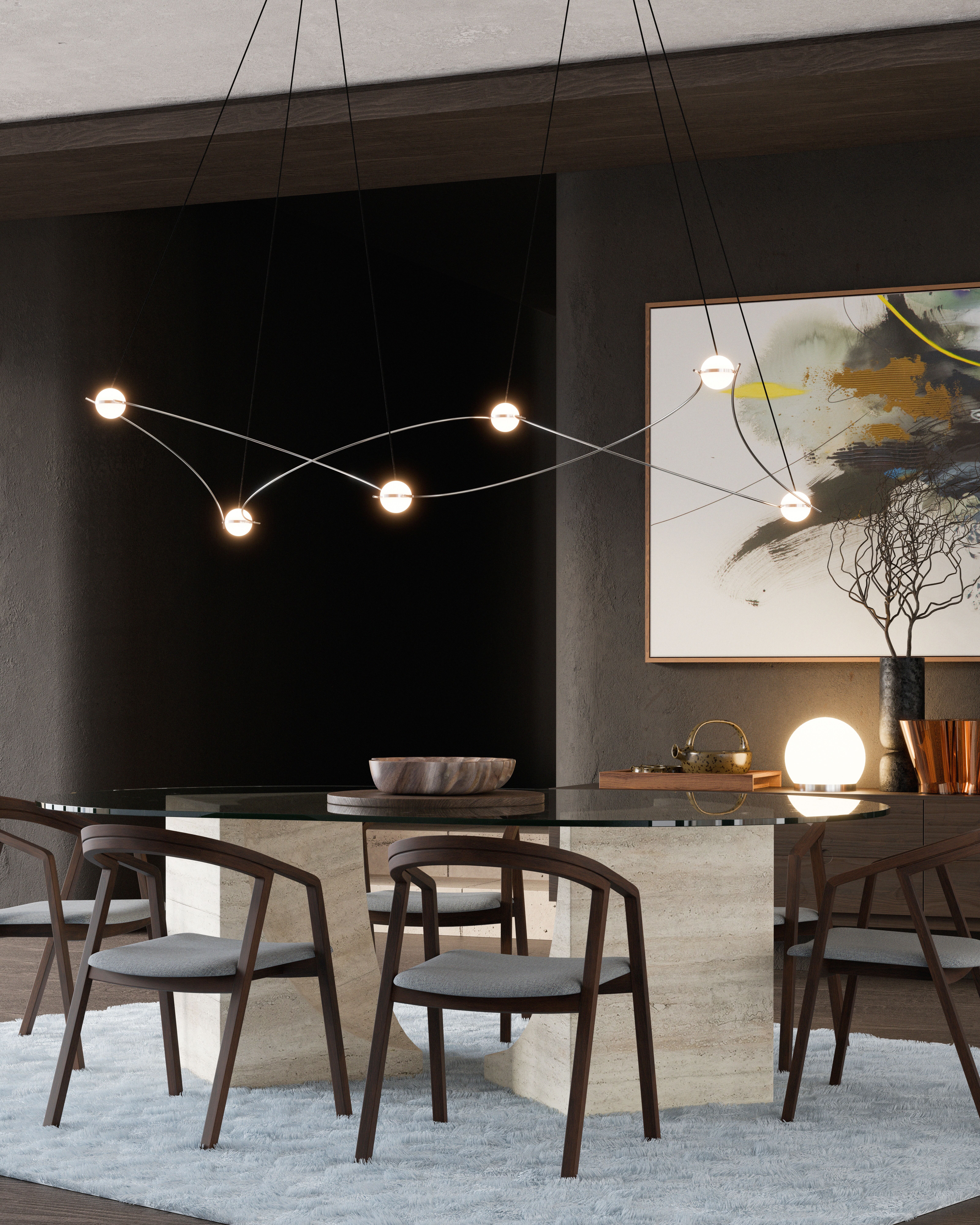
Kosmos pendants combine 80 mm opal-glass spheres with 6 mm stainless-steel rod profiles in fixed 4S, 4L, 6S, and 6L configurations; light is omnidirectional 360° from each sphere, with the LED housed inside the glass. The Kosmos pendant light is built around a deceptively simple premise: opal glass spheres suspended in space by thin curved lines of hand-polished stainless steel. The result reads not as a conventional luminaire but as a spatial composition: a constellation fixed in the ceiling plane, where the light source and the structure are one and the same object.

The Structure of the Kosmos
The formal logic of the Kosmos is defined by two elements: opal glass spheres of 80mm diameter and 6mm stainless steel profiles, curved and hand-polished. The profiles link the spheres and anchor the composition to the ceiling, but remain visually quiet, thin enough to read as lines rather than hardware. Each sphere functions as a node within the system; the spatial relationships between them define the overall reading of the composition. This economy of means, precision achieved with minimal material presence, is the central design principle of the series.
Light Distribution: 360° from Every Sphere
Each opal glass sphere houses an integrated dimmable LED module that distributes light uniformly in 360°. There is no directional bias, no downward cone, no uplight restriction. Light radiates evenly from every node in the composition, with the total ambient contribution proportional to the number of spheres in the model. The LED specification is 3000K: warm white, consistent with the warm metallic finish tones available in the range. A structurally significant detail: the LED module serves simultaneously as the fixation point that holds each sphere to the steel profiles, integrating light source and structural connection into a single element.
Kosmos Models and Scale
The Kosmos series comprises four models: 4S, 4L, 6S, and 6L. The number indicates the sphere count; S and L describe the overall scale of the composition, determined by the length of the connecting steel profiles: shorter for S, longer for L. The glass spheres are identical across S and L variants. The 4-sphere models mount on a single ceiling canopy; the 6-sphere models use two canopy points, which is a relevant consideration for ceiling planning. Each model represents a fixed spatial proposition: the constellation is defined by the model itself, not adjusted on site or customised per order.
Finish Options for the Kosmos Frame
The stainless steel frame is available in four finishes: Stainless Steel Polished, Gold Tone, Copper Tone, and Dark Bronze Tone. Stainless Steel Polished is the most visually recessive option, the profiles catch ambient light and read as part of the luminous composition. Dark Bronze Tone makes the structural elements recede further, placing all visual emphasis on the spheres. Gold Tone and Copper Tone introduce material warmth into the composition and are frequently specified in hospitality interiors. Custom finishes are available on request for projects with specific material requirements.
Specifying the Kosmos Pendant Light
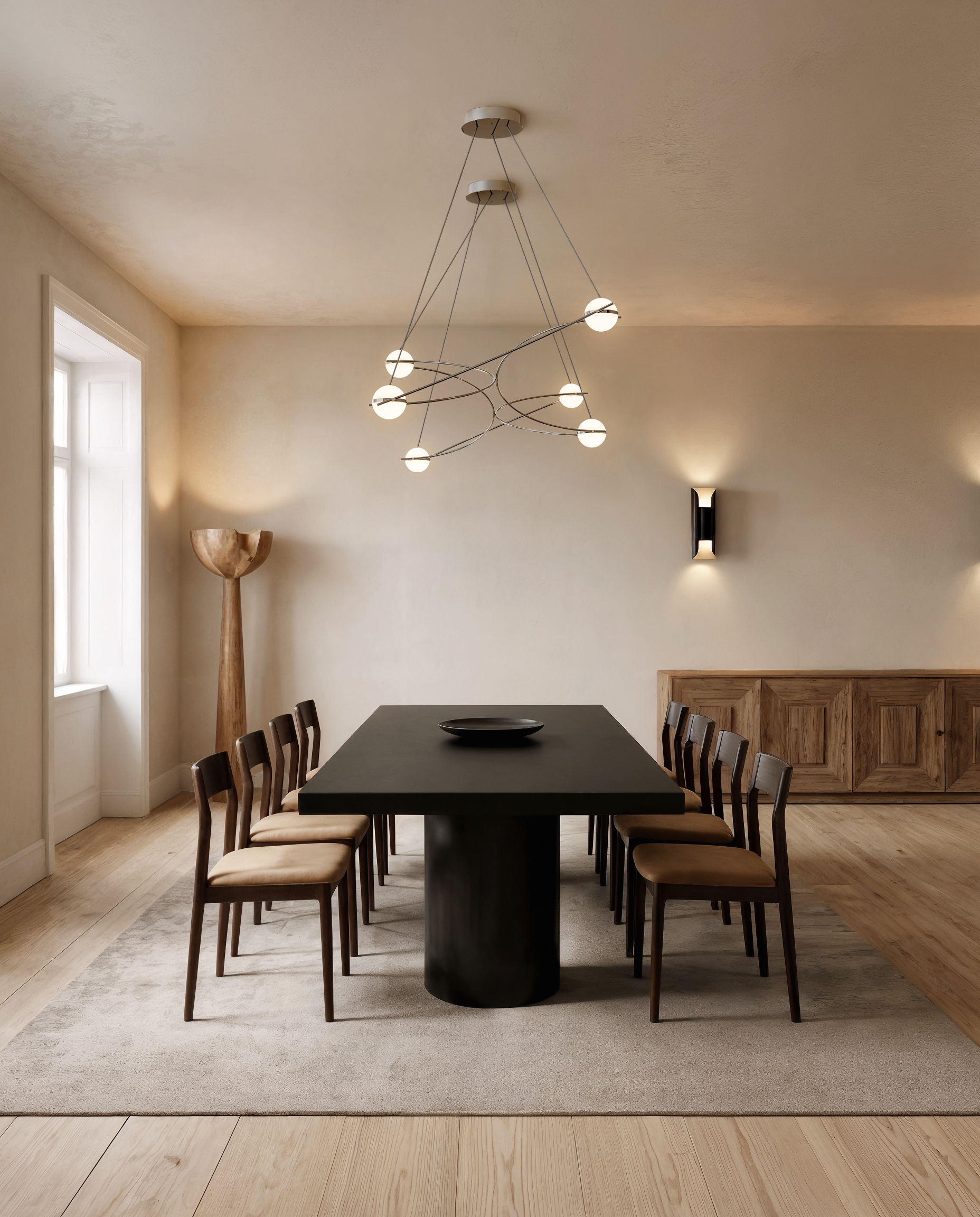
The configuration described here: Kosmos 6L.
Interior architects specifying the Kosmos begin with model selection (4S, 4L, 6S, or 6L) based on ceiling volume, available suspension height, and the intended spatial scale of the composition. For 6-sphere models, ceiling plans should account for two canopy positions. Finish is confirmed at the specification stage; custom finish requests are handled directly by the MOSS team. For projects with specific requirements around ceiling conditions, suspension length, or non-standard finishes, designers are welcome to contact MOSS Objects directly to discuss the brief.


