Restaurant Pendant Lighting: Specification Notes for Designers
Updated: Aug 13
Restaurant pendant lighting positions the underside 65–75 cm above the table for two- and four-tops, and uses directional shades (Emily, Dune) to contain glare at seated eye height (1.2 m). Restaurant pendant lighting does more than illuminate tables. It establishes atmosphere, anchors spatial zones, and, when specified correctly, becomes part of the interior's architectural language. A restaurant is a space of deliberate composition: every surface, material, and light source contributes to a designed experience. The pendant light sits at the intersection of architecture and hospitality, mediating between the structural envelope above and the intimate scale of the table below.
For interior architects and designers working through a restaurant lighting brief, the pendant specification involves decisions about scale, suspension length, cluster configuration, finish, light distribution, and durability. These are not independent variables; they interact with the ceiling height, the table layout, the overall lighting scheme, and the brand identity of the restaurant itself. Getting them right requires early engagement with the luminaire manufacturer, not a last-minute product selection from a catalogue.
Why Pendant Scale Defines a Restaurant Interior
Restaurant spaces are built around a visual hierarchy. The architecture defines the volume, the furniture defines the plan, and the lighting defines the atmosphere. Pendant lights sit in the middle field of vision, neither ceiling nor table, and their scale determines how the room reads as a whole. A pendant that is too small reads as furniture, peripheral and inconsequential. One that is too large competes with the structural envelope and overwhelms the table it was meant to define.
In practice, diameter-to-table-ratio is rarely sufficient as a sole guide for restaurant pendant specification. Ceiling height, finish reflectivity, the number of pendants in a cluster, and the ambient light level all modify the perceived scale of the luminaire. A 40cm Emily pendant in Anthracite semi-matte reads very differently from the same pendant in Black high gloss; the gloss surface catches light and appears larger, while the matte surface absorbs it and recedes. The specification must account for all of these variables simultaneously.
For banquette seating along a wall, a linear arrangement of identically scaled pendants creates rhythm and repetition. For freestanding tables in an open dining room, individual pendants or small clusters define each table as a discrete zone. The scale decision is ultimately a spatial one: how much of the vertical space between ceiling and table does the pendant need to command to create the desired sense of enclosure?
Ceiling Height, Suspension Length, and the Sense of Enclosure
Most restaurant ceilings fall between three and five metres. In this range, suspension length is a specification variable, not a fixed dimension. For table pendants, a hanging height of 65 to 75cm above the table surface is the standard range for functional light distribution without interference with sightlines across the table. At 65cm, the pendant creates a more intimate, contained atmosphere appropriate for fine dining. At 75cm, the light pool widens and the pendant relates more to the room than to the individual cover.
In restaurants with higher ceilings (converted warehouses, industrial spaces, heritage buildings), the suspension cable becomes a design element in itself. A two-metre cable draws the eye vertically and creates a column of implied space between ceiling and table, establishing a sense of enclosure within a large volume. MOSS pendants are produced with custom suspension lengths as standard, using textile-braided cable colour-matched to the pendant finish. This should be defined in the initial brief, not resolved on site by an electrician with wire cutters.
Bar counter lighting follows a different logic. Pendants above a bar need to be higher, typically 80 to 90cm above the counter, because bartenders work standing and need clear headroom. The light distribution at this height is wider, which suits the bar's function as a social and service zone rather than an intimate dining surface.
Cluster Configurations for Restaurant Pendant Lighting
Single pendants rarely solve restaurant-scale installations. Most projects call for clusters or linear arrangements above banquette seating, bar counters, private dining rooms, and open dining floors. The configuration determines whether the lighting reads as a composed installation or a collection of individual objects.
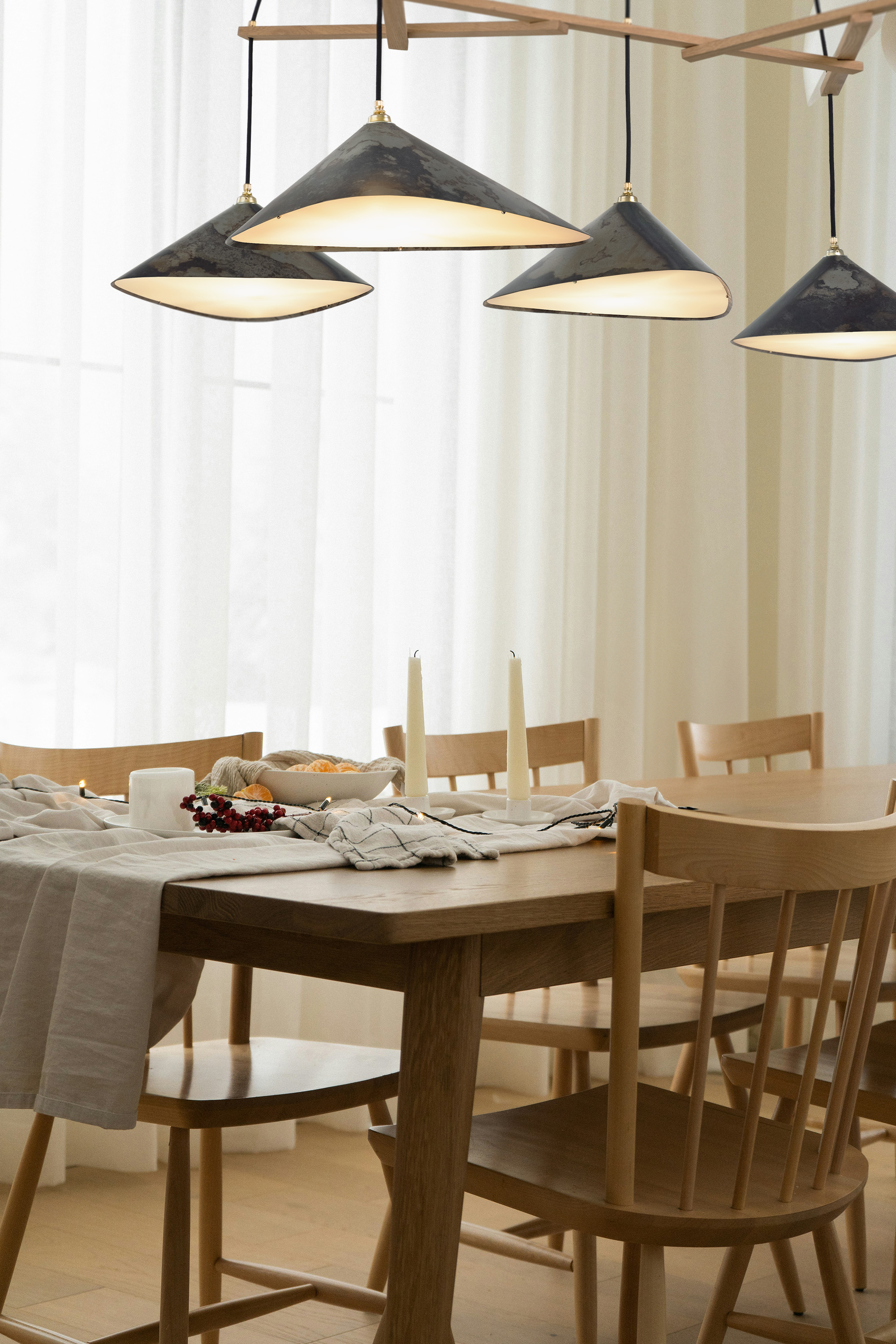
MOSS produces multi-point canopies with custom centre distances. For the Emily collection, Group of Three, Five, Seven, or Nine pendants on a shared canopy creates a unified installation above a long table or banquette. The pre-configured spacing eliminates alignment issues and ensures consistent visual rhythm across the dining room.
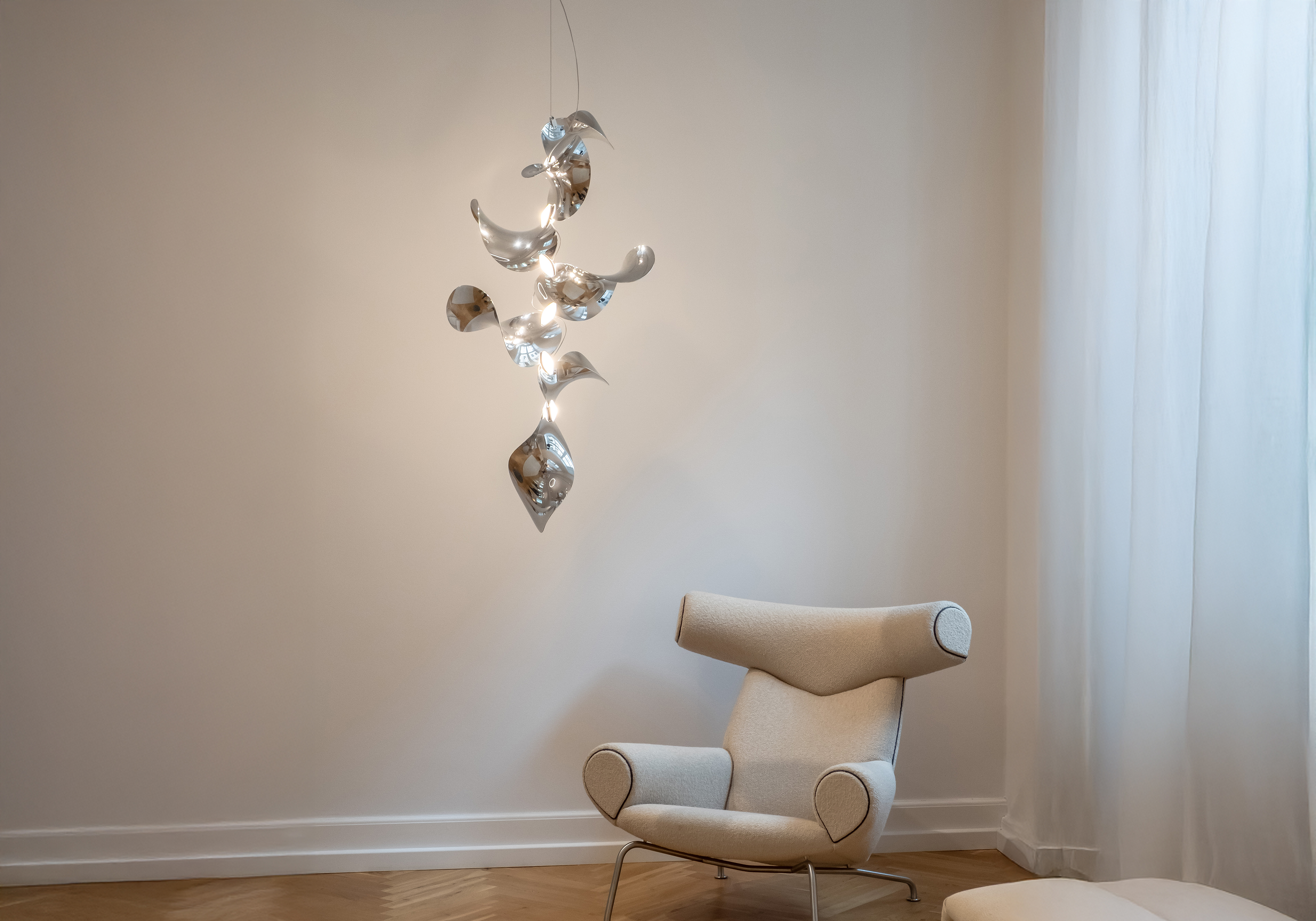
The Dune collection offers a different vocabulary for restaurant installations. Its modular aluminium discs can be configured as a Curve, a flowing horizontal line that follows the length of a banquette, or as a Vertical Cluster that cascades through the vertical space in a stairwell or double-height dining room. A Dune 8 in Curve configuration above a six-seat banquette creates a continuous luminous line that defines the seating zone without the visual interruption of multiple individual canopies. The 2700K LED colour temperature is warmer than most architectural lighting, which contributes to the relaxed dining atmosphere that restaurant designers typically seek.
Metal Finishes and Ambient Reflectivity
In restaurant environments, finish selection affects not only aesthetics but the quality of ambient light in the room. Polished metal surfaces distribute light differently from matte or patinated finishes, and this difference is amplified in the low-light conditions typical of evening dining.
Stainless Steel Polished, as used on the Kosmos collection frame, and Silver Polished in the Dune range create reflective highlights that read well in dim conditions. The pendant surface catches candlelight, reflects the warm tones of the table setting, and contributes to the general ambient level without producing direct light. This is a valuable effect in restaurants where the overall light level is deliberately low but the space should not feel dark.
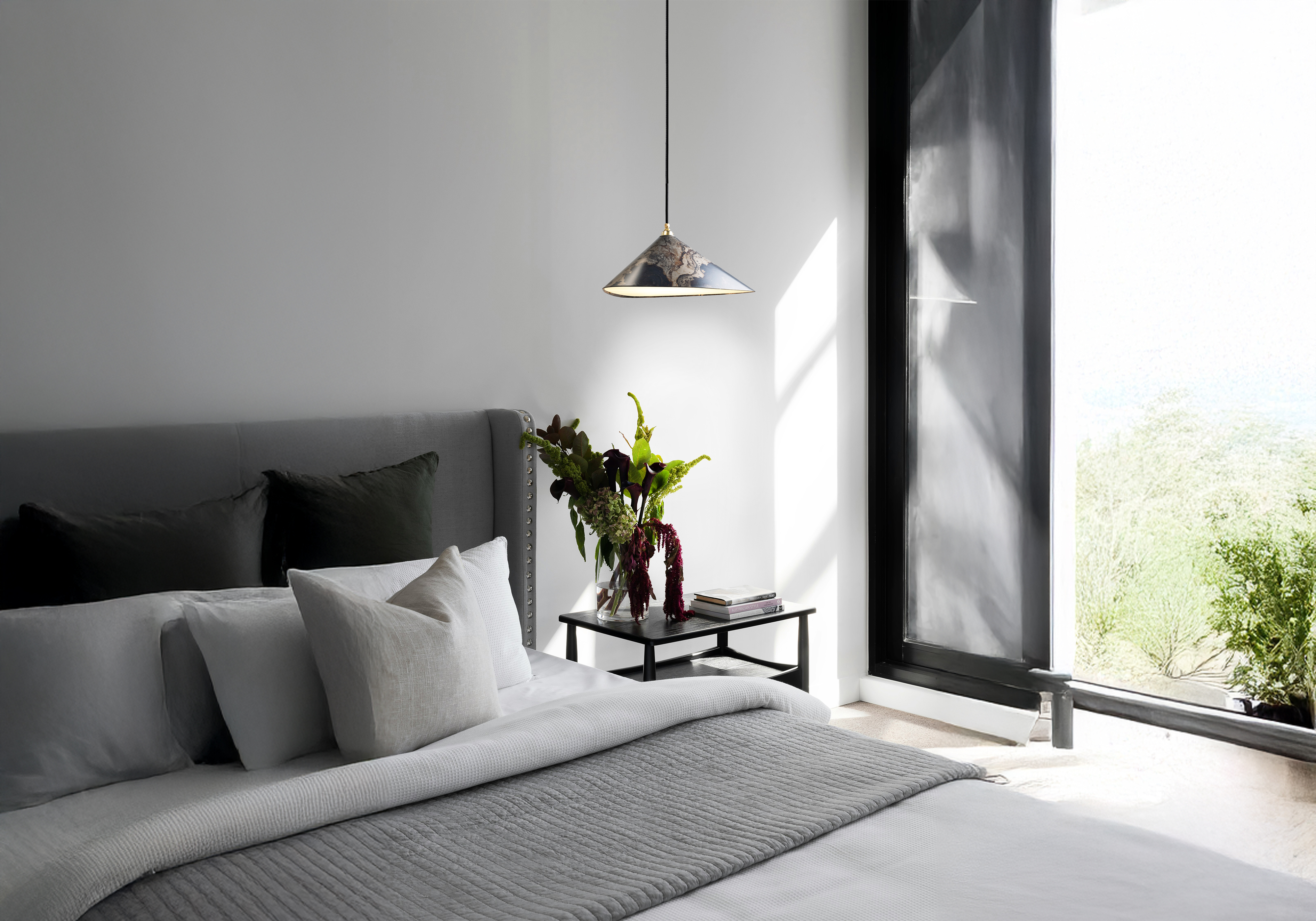
Dark Bronze Tone absorbs ambient light and allows the pendant to recede into the ceiling plane, placing visual emphasis on the light cone below rather than the object itself. This is the appropriate choice when the pendant's role is primarily functional. Copper Tone and Gold Tone introduce warmth into the colour rendering of surrounding surfaces: skin tones appear healthier, wood appears richer, and the overall palette of the room shifts toward amber. These finishes are wet-lacquered onto the base material, giving them a depth and consistency that electroplated surfaces cannot achieve.
Starting the Restaurant Specification Process
Most MOSS restaurant projects begin with a ceiling plan and a brief covering the intended atmosphere, finish preferences, table layout, and delivery programme. From this, MOSS provides configuration drawings showing pendant positions, suspension lengths, and canopy layouts, along with indicative pricing, before any commitment is required. This initial dialogue typically takes one to two weeks and establishes whether the MOSS range is the right fit for the project.
Restaurant projects often involve larger quantities than residential commissions; fifteen to forty pendants is typical for a mid-sized restaurant. MOSS produces in batches to ensure finish consistency across all luminaires in a single project. Standard lead times are six to twelve weeks from order confirmation, with larger hospitality orders typically at the upper end of that range. Designers should factor this into the construction programme and engage MOSS during the design development phase rather than after fit-out has begun.
A configuration that works over long tables: Emily Group of Seven.
For specifications or to discuss a project, contact MOSS Objects directly.


